25Aug
Supporting Reliable Communications in a Challenging Environment.
RAFT Systems recently completed a specialist communications installation at a remote radar site, supporting the deployment of new transponder equipment and antennas as part of a wider radar system upgrade.
The project involved the installation of two transponder antennas on an existing metallic tower, alongside the installation of two transponders and associated UPS equipment within the site's communications rack.
Working at a remote radar facility presented a number of logistical and installation challenges, requiring careful planning to ensure the works could be completed safely, efficiently and with minimal disruption to the existing infrastructure.
The Challenge
The project required the removal of three existing antennas from the tower before installing two new transponder antennas in their place.
Following a site assessment, it was initially identified that the existing mounting arrangements might not be suitable for the new antennas. However, following further discussions with the end customer, it was confirmed that the new antennas needed to be installed in the same general locations as the existing antennas.
This meant RAFT's installation team needed to carefully assess the existing tower arrangement and determine the most suitable two positions from the three available.
The project also involved significant cable-routing considerations. The route between the tower and the equipment building was underground and partially obscured, meaning the exact cable path and overall cable requirement could not be confirmed in advance.
Initial estimates indicated that approximately 80 metres or more of coaxial cable could be required for the two antenna runs.
The Installation
RAFT provided a two-person installation team, with the works planned over three days.
The installation included:
- Dismantling three existing transponder antennas.
- Installing two new transponder antennas on the existing metallic tower.
- Installing the required antenna mounting hardware.
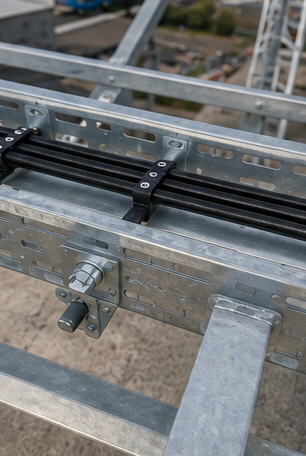
- Routing and installing new coaxial cable between the antennas and equipment building.
- Installing four N-Type male connectors.
- Installing cable support and fixing hardware.
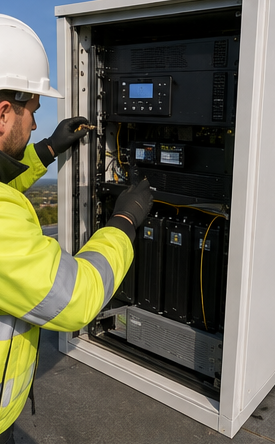
- Installing two transponders within the existing communications rack.
- Installing two UPS units.
- Completing the associated equipment and cabling connections.
The tower work required suitably experienced personnel capable of carrying out installation activities at height, while the equipment installation within the building required careful integration into the existing rack infrastructure.
Working Around Existing Infrastructure
One of the key considerations was ensuring the new installation could be completed using the existing tower infrastructure while maintaining the required antenna positions.
With three existing antennas to be removed and only two new antennas required, the installation team had to assess the available positions and select the most appropriate locations for the replacement antennas.
The cable route also required careful consideration. The underground route between the tower and building passed beneath concrete or similar surface tiles, creating the possibility that sections would need to be lifted to install the new cabling.
This highlighted the importance of allowing sufficient flexibility within the installation programme when working on established infrastructure where the full cable route cannot be visually inspected.
Equipment Installation
Within the communications building, the existing rack had already been depopulated and prepared to accommodate the new equipment.
The installation included two MSSR transponders and two UPS systems, with the associated battery packs planned as a subsequent activity due to equipment availability.
The equipment installation was completed with consideration for the existing rack layout and the requirements of the new transponder system, ensuring the installation was organised and ready for connection into the wider radar infrastructure.
A Flexible Approach to Remote Site Installation
Remote communications sites can present challenges that are difficult to identify until the installation team is physically on site. Existing infrastructure, restricted access, cable routes and equipment availability can all affect the way an installation needs to be approached.
For this project, early site assessment and communication with the customer were particularly important in establishing the final antenna positions and identifying the potential cable-routing requirements.
RAFT's experienced installation team was able to work within the existing infrastructure while adapting to the practical constraints of the site.
The Result
The project provided the customer with a new transponder antenna and equipment installation, incorporating:
- 2 new transponder antennas
- 2 MSSR transponders
- 2 UPS systems
- New coaxial antenna cabling
- Associated connectors, mounting hardware and cable support
- Removal of 3 redundant antennas
The works demonstrated RAFT's ability to deliver specialist wireless communications installations in challenging and remote environments, combining tower-based antenna installation with equipment integration inside the communications facility.
Comments